A heart-warming novel about a mother, a gifted child, and the courage to let go
The Wrenwick Lights Book 2
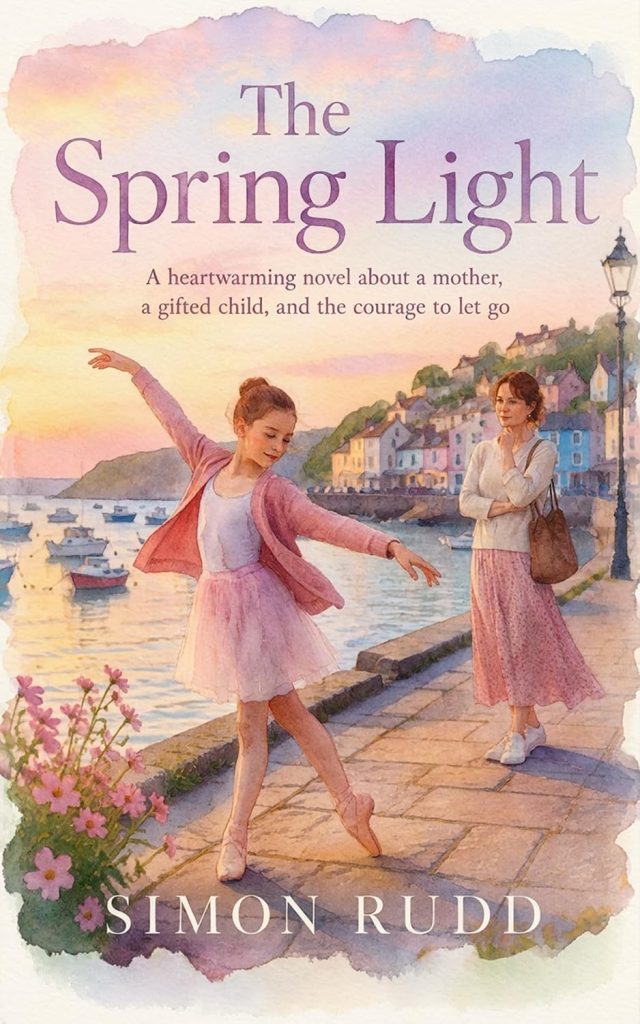
Sometimes the hardest thing about love is opening the door.
Anne Hale has built a good, careful life. She runs the village shop in Wrenwick, knows everyone who comes through the door, and has spent eleven years keeping her daughter Rosie safe, happy, and close. It's enough. It has always been enough.
Then Clara — the dancer who came home and stayed — says the words Anne has been quietly dreading: Rosie has a gift. A real one. The kind that belongs to a bigger stage than a village hall, in a city Anne barely knows, surrounded by families who speak a language of fees and forms and easy confidence that Anne has never been able to afford.
As spring turns the Northumberland coast green and gold, Anne is pulled between the daughter she wants to protect and the daughter Rosie is becoming. Because loving a child, she's learning, isn't only about keeping them safe. Sometimes it means giving frightened permission for a future you can't follow them into — and trusting that the door you're terrified to open is the one they were always meant to walk through.
Warm, tender, and quietly heartbreaking, The Spring Light is a moving story about motherhood, courage, and the cost of letting go. Perfect for readers of Maeve Binchy, Katie Fforde, and Jojo Moyes.
The second book in the Wrenwick Lights series. Each book can be read alone.
Read the first chapter
Chapter 1 — The Door Propped Open
Anne propped the shop door open for the first time that year and immediately regretted it.
The morning had looked warmer from inside. From behind the counter, with the kettle clicking itself off beside the sink and the first blade of sunlight lying across the display of birthday cards, early March had given an impression of generosity. The high street was bright in patches. The sandstone fronts of the cottages had begun to dry at their edges. A gull stood on the roof of the bus shelter with the proprietorial air of something that had survived another winter and expected credit for it.
But the wind came in low and sideways, lifting the corner of the newspaper stack and bringing with it the smell of salt, damp wool, and the road after rain. Anne stood with one hand still on the door and felt the cold move over the shop floor, finding the places where the tiles had cracked and the mat never lay flat. It was not a winter cold, exactly. Winter had weight. Winter came in and sat down. This was spring cold, thinner and more personal, slipping under sleeves, making promises it was not yet prepared to keep.
She should have closed the door.
Instead she wedged it with the old iron duck Margaret Rowan had once brought in from a jumble sale and said, “You’ll find a use for that,” in the manner of someone donating both object and prophecy. The duck had been painted green originally, then black, then green again, and now existed in the undecided colour of things that had spent years being kicked by practical shoes.
Anne looked at it holding the door and thought: there. First day.
Not that anyone would mark it. There was no rule in Wrenwick for when spring began. No date, no ceremony. Only a series of reluctant permissions. A door left open for ten minutes. A coat unbuttoned halfway down the street. Someone saying the evenings were drawing out and someone else saying not to tempt fate. Daffodils showing their heads near the hall wall and being flattened two days later by rain off the sea. Spring here did not arrive. It tested the latch.
The bell above the door gave a faint unnecessary ring in the wind.
Anne went back behind the counter and straightened the newspapers for the third time since seven. The nationals were in their usual stack, the local papers beneath, the crossword magazines arranged to disguise the fact that only three people bought them and all three had strong opinions about where they should be placed. She checked the bread shelf. Four white, three wholemeal, two seeded loaves from the bakery inland, all delivered at half six by a man who considered conversation an optional extra and weather reports a form of intimacy. Milk in the fridge. Eggs on the side. Stamps in the drawer. Float counted. Card machine working, for now.
There were mornings when the shop felt like competence made visible. Rows, lists, change, dates, quantities. The reliable mathematics of need. People came in wanting bread, milk, paracetamol, batteries, envelopes, dog food, birthday candles, a tin of soup, a newspaper, the reassurance of someone saying good morning and meaning it. Anne could provide most of those things. Not always cheaply, not always cheerfully, but with a steadiness people had come to depend on.
The depending was the point.
It was also, some mornings, the weight.
She went to the small sink behind the partition and poured hot water into her mug. Tea bag, no sugar, milk measured by eye. She had drunk tea this way for so long that the colour of it had become part of the morning’s order. Too pale and the day felt unstarted. Too strong and it suggested haste or trouble. This one was right. She stood for a moment with both hands around the mug and listened.
Above the small shop noises — the fridge hum, the paper shift, the wind nudging the open door — she could hear Rosie in the kitchen upstairs.
Not clearly. The flat above the shop held sound unevenly. Voices disappeared, cupboards carried, the bathroom pipes announced themselves to the whole building whether anyone asked them to or not. Movement travelled best. Anne could tell where Rosie was by the weight of it: bedroom, landing, bathroom, kitchen. This was kitchen. Small feet on worn lino. A chair dragged, carefully at first and then with a catch against the table leg. A pause. Then the soft, regular sound of Rosie counting under her breath.
Anne closed her eyes.
One, two, three, four.
Not aloud enough to be heard properly. Not meant for anyone else. The numbers came through the ceiling as rhythm rather than language, the small pulse of effort.
The chair scraped again. Rosie must have placed it near the radiator, where the lino gave her enough room between table and counter. Anne pictured her without needing to go upstairs: school tights not yet changed, cardigan over her pyjama top, hair coming loose from the plait Anne had done last night, one hand on the chair back, feet turned out with the seriousness Clara had given them. The chair was too low for a barre. The kitchen was too narrow for dancing. The lino curled slightly near the back door and the floor sloped toward the sink, though no one noticed unless a dropped marble rolled there or a child tried to hold balance.
Anne drank her tea and did not go up.
This was the new discipline: not going up every time.
Rosie had always made things with her body. Before dance there had been cartwheels, hopping games chalked on the lane, balancing along the low wall by the harbour path with her arms out and her face tight with concentration. Anne had thought of it as ordinary child movement, the way children climbed, spun, ran, collapsed, recovered. Energy looking for somewhere to go.
Then Clara Thorne had returned to Wrenwick and reopened the dance school properly, and the energy had found a shape.
At first Anne had been grateful in the uncomplicated way a parent was grateful for anything that gave a child joy and structure and a reason to sleep well on Saturday night. Rosie came home from class flushed and hungry, smelling of the hall’s old wood and floor dust, full of words Anne half understood: plié, tendu, port de bras, turnout. Anne listened while slicing cheese or finding clean socks or ringing up Mrs Briggs’s milk and newspaper, and the words seemed no more dangerous than spellings or times tables.
But the thing had deepened.
That was the word Anne kept not using.
It had gone beyond liking. Liking was easy. Liking could be fitted around school and the shop and tea and bath and bed. Liking had a place. Rosie did not merely like dance now. She attended to it. She came downstairs in the morning with a seriousness that had not been there before, as though some part of her had continued working while she slept. She stood in queues with her feet making quiet decisions. She watched people’s posture. She looked at Clara the way some children looked at stained-glass windows in churches, not because they understood everything but because they understood enough to be still.
A customer entered, and the bell rang properly this time.
Anne put the mug down. “Morning, Tom.”
Tom Ainsworth ducked slightly as he came through the doorway, though he did not need to. Some tall men did that in old buildings, either out of memory or politeness. He brought cold air and the smell of farm mud with him, his boots leaving dark half-moons on the mat.
“Door open,” he said.
“First time this year.”
“You’ll have it shut again by nine.”
“Probably.”
He took his paper from the stack without looking, because his hand knew where it lived. “Rosie at school today?”
“After breakfast. She’s upstairs making the kitchen unsafe.”
“Dancing?”
Anne smiled before she could stop herself. “Something like that.”
Tom put coins on the counter. Exact, as always. His hands were cracked at the knuckles, red from weather and work, and there was a tear in the cuff of his jacket that had been there since January. Anne noticed such things automatically. A man buying own-brand biscuits instead of the usual packet. A woman counting change twice. Someone who said they were fine too quickly. The shop trained attention. Or perhaps motherhood had trained it first, and the shop had given the attention somewhere to stand.
“She’s good, is she?” Tom asked.
Anne moved the coins into the till. “She enjoys it.”
“That’s not what I asked.”
“No.”
Tom waited. He had the rural gift for silence, which was not the same as patience. It was more active than that. He could set a silence down and let someone else decide what to do with it.
Anne closed the till. “Clara thinks she’s doing well.”
“Aye. Well.” He folded the paper under his arm. “Clara knows what she’s looking at.”
That was the problem, though Anne did not say so. Clara did know. Clara saw Rosie in a way Anne could not. Not better, Anne told herself. Not more. Only differently. Anne knew the size of Rosie’s school shoes, the toothpaste she disliked, the exact temperature at which porridge became unacceptable, the face she made before tears and the face she made when pretending not to need help. Anne knew whether a cough was real. She knew which silences meant tiredness and which meant trouble. She knew how Rosie liked the corner of her duvet tucked under her feet.
Clara knew the part of Rosie that moved toward a future Anne could not yet picture.
“See you,” Tom said.
“See you.”
He left with the paper, and the wind shouldered its way in around him, lifting the top sheet on the postcard rack. Anne came out from behind the counter to straighten it. The cards were mostly for tourists who were not here yet: views of the beach, the church, the line of dunes in late summer, the harbour at a flattering angle. Wrenwick in postcard form was always calmer than Wrenwick in life. Less wind. Fewer damp socks. No heating bills. No one standing behind a counter in March listening to her daughter practise grand pliés against a kitchen chair and wondering what, exactly, she was meant to do with hope.
The shop bell rang twice more before eight. Mrs Briggs for milk and a newspaper, with a comment about the council bins that contained a full civic argument in three sentences. Jean Rookby for stamps she would misplace by lunchtime and a packet of custard creams she claimed were for visitors, though Anne knew Jean had no visitors expected until Friday. A man from one of the holiday cottages for coffee, bacon, eggs, and directions to the coastal path, wearing shoes too clean for what he intended.
Between customers, Rosie’s counting continued above.
Sometimes there was silence, followed by a thump.
Not a fall. Anne could tell the difference. This was a controlled landing. Or controlled by Rosie’s standards, which meant the ceiling gave its opinion.
Anne looked up. “Careful,” she called.
“I am!” came Rosie’s voice, muffled and indignant.
“You’ve got school.”
“I know.”
“You need breakfast.”
“I know.”
Anne waited.
The chair scraped again.
At eight fifteen she closed the till drawer and went upstairs.
The flat smelled of toast that had gone cold and the faint talc smell of Rosie’s dance shoes drying near the radiator, though Anne had told her twice not to put them there because Clara had said heat was bad for the leather. The kitchen was exactly as Anne had pictured it and not exactly. The chair was by the radiator, yes, but Rosie had pushed the table further back, rolled up the small rug, and placed two tins of tomatoes at the edge of the curling lino to hold it flat. Her school uniform was half on: skirt, tights, blouse untucked, cardigan abandoned on the back of another chair. Her hair had slipped loose on one side. One foot was bare, the other still in a sock, as though she had been interrupted halfway between being a schoolchild and being something else.
She was standing in first position with one hand on the chair back and her face turned toward the dark square of the kitchen window. Outside, the yard wall was damp and green at the base. Above it, a slice of pale sky.
“Rosie.”
Rosie did not move immediately. She rose from the plié slowly, knees over toes, Clara’s words in her body if not in the room. Only when she was standing did she turn.
“I nearly had it.”
“You nearly had breakfast ten minutes ago.”
“I was just checking.”
“Checking what?”
Rosie looked at the chair, the floor, her feet. “If it felt the same.”
“As what?”
“As Saturday.”
Anne leaned against the doorframe. She had come upstairs prepared to be brisk. Breakfast, shoes, hair, school bag, reading book, water bottle. The list was ready in her mouth. But Rosie’s face stopped her. There was nothing naughty in it, no performance of innocence, no attempt to get away with anything. She had been checking. That was the truth of it. Saturday had given her something, and the kitchen was where she had gone to find out whether it could be found again.
“Does it?” Anne asked.
Rosie shook her head. “The floor’s wrong.”
“It’s a kitchen.”
“I know.” Rosie looked down at the lino with an expression of polite disappointment, as though the kitchen might have tried harder. “And the chair wobbles.”
“So do you when you’re late for school.”
Rosie smiled, but only briefly. Her attention had already gone back to her feet. “Clara says I need to feel the floor pushing back. But this floor doesn’t.”
Anne followed her gaze. The lino was old, yellowed near the door, patterned in small brown squares that had once perhaps looked cheerful. Beneath it, the boards dipped. The whole kitchen had been laid by someone who believed level was an aspiration rather than a requirement.
“The floor in the hall is old too,” Anne said.
“Yes, but it knows dancing.”
The answer came so quickly, so plainly, that Anne had no defence against it.
Rosie picked up her sock from the chair and sat to put it on. Her toes were narrow, still child-soft, the nails uneven because she would not sit still to let Anne cut them properly. Anne watched her pull the sock over her heel and thought of Clara watching those same feet in the mirror-lined room upstairs at the hall. Noticing things Anne did not have names for. Alignment. Strength. Promise. Danger. Perhaps not danger. Anne supplied that word herself and then resented it.
“Breakfast,” Anne said.
“I did toast.”
“You made toast. You didn’t eat it.”
“It went cold.”
“Toast does that when abandoned.”
Rosie took the plate from the side and made a face at the stiff triangle of toast. Anne took it from her, buttered another slice, and put the kettle back on. They moved around each other in the kitchen with the practised closeness of two people who lived above a shop and had learned how not to collide. Rosie finished dressing while standing. Anne redid her plait at the table with the toast in Rosie’s hand and crumbs falling onto the school skirt.
“Head still.”
“It is.”
“It’s moving.”
“That’s because you’re pulling.”
“That’s because your hair has opinions.”
Rosie giggled, then went still with the sudden obedience she gave to things that mattered. Anne drew the comb through the dark hair, gathered it into three sections, crossed them over, tightened, crossed again. Her hands knew this work. Plaiting was one of the daily proofs of care, like packed lunches and clean socks and remembering which days needed PE kit. Small acts, repeated until they became invisible. Anne tied the elastic at the end and smoothed the loose hair at Rosie’s temple.
“There.”
Rosie reached back to feel it. “Tighter than yesterday.”
“It needs to survive maths.”
“And playground.”
“And whatever you do that makes it look as though you’ve fought a hedge by three o’clock.”
Rosie turned in the chair. “Can I go to the hall after school?”
Anne was rinsing the butter knife. She did not look round. “Why?”
“To practise.”
“You have homework.”
“After homework.”
“The hall won’t be open.”
“Clara might be there.”
There it was. Not a demand, not yet. A possibility placed carefully on the table between them.
Anne dried the knife and put it in the drawer. “Clara has work of her own to do.”
“She likes teaching me.”
“She teaches all of you.”
“I know.”
The injured dignity in Rosie’s voice made Anne turn. Rosie was not sulking. She was not claiming specialness. That might have been easier to answer. She was simply correcting an inaccuracy. Clara taught all of them, yes. But there was something between Clara and Rosie during class, something Anne had watched from the doorway more than once: Clara giving a correction and Rosie receiving it before the sentence had finished; Rosie trying again; Clara’s attention sharpening, not softening, in response. Seriousness answering seriousness.
“I mean,” Rosie said, quieter, “I want to get it right before Saturday.”
“It’s Monday.”
“I know.”
Anne wanted to say, That is exactly what I mean.
Instead she said, “We’ll see.”
Rosie’s face changed. Not dramatically. A small closing around the eyes, the mouth accepting the words before the rest of her had agreed to them. We’ll see was a phrase Anne used often. It meant many things. It could mean yes but not yet, no but I do not want the argument, I need to check the money, I need to check the time, I need five minutes in which nobody wants something from me. Rosie had grown up inside its meanings. She could sort them almost as well as Anne could.
This morning she heard delay.
“Okay,” she said.
Anne hated herself a little for the relief that came with the child’s obedience.
Downstairs, the bell rang.
“Shoes,” Anne said. “Bag. Coat.”
Rosie slid off the chair and went to fetch them. Anne picked up the plate, tipped crumbs into her hand, and looked at the kitchen chair standing by the radiator. Its back was polished where Rosie’s hand had held it. Not worn, not yet, but marked faintly with warmth and use. A kitchen chair pretending to be a barre. Two tins of tomatoes holding down the floor. A child testing whether the room she lived in could answer a question asked by a room somewhere else.
The bell rang again.
“I’m coming,” Anne called, though the customer below could not hear her through the ceiling and probably knew perfectly well she was coming because Anne always came.
She followed Rosie downstairs. The shop had admitted Mrs Briggs again, which meant either she had forgotten something or remembered something worth saying. Mrs Briggs stood by the counter with her purse open and her hat at a slight angle, looking around as if the shop might have changed in the eight minutes since she had left.
“Forgot teabags,” she said.
“They’re behind you.”
“So they are.” Mrs Briggs took a box, then looked at Rosie. “Morning, love. You off to school?”
Rosie nodded. “Morning.”
“Still dancing?”
Rosie’s face lit before she could make it polite. “Yes.”
“She was moving furniture at quarter past seven,” Anne said.
“Good,” Mrs Briggs said. “Furniture needs to know who’s boss.”
Rosie laughed. Anne rang up the teabags. Mrs Briggs counted out coins and then, as Anne had known she would, did not leave.
“I saw Clara yesterday,” Mrs Briggs said. “Outside the hall. She said the class is getting bigger.”
“Eight now,” Rosie said.
“Is it?” Mrs Briggs looked at Anne. “There you are then.”
Anne did not know what there you are then meant, and did not ask. In Wrenwick, many sentences arrived carrying more cargo than their size suggested. It was not always wise to open them in public.
Rosie shouldered her school bag. “Bye, Mum.”
“Coat done up.”
“It is.”
“It isn’t.”
Rosie zipped it, kissed Anne quickly at the edge of the counter, and was gone through the propped-open door into the spring-cold morning. Anne watched her go. The school bus stop was visible from the shop, a little way up the high street near the post box. Two other children were already there, their bags on the ground, their bodies still loose, the day not yet anything they had to organise. Rosie joined them, but even from this distance Anne could see she was not quite in their rhythm. She stood with one foot turned out, the school bag strap in one hand, her head angled toward whatever one of the others was saying. Present, but partly elsewhere.
Mrs Briggs followed Anne’s gaze.
“She’s growing,” she said.
“They do.”
“Not just upwards.”
Anne turned from the window. Mrs Briggs’s face, lined and unsentimental, gave nothing away. She put the teabags into her bag and snapped the purse shut.
“You don’t have to look so worried every time someone notices,” she said.
“I don’t.”
“You do.” Mrs Briggs moved toward the door. “Your mother did the same.”
Anne’s hand tightened on the counter edge.
Mrs Briggs either did not notice or chose not to. “With you, I mean. Different thing, of course. But same face.”
Anne’s mother had been dead twelve years and still people in Wrenwick produced her without warning, like a coin found in an old coat. Anne had learned not to flinch. Or had learned to flinch inwardly, which from the outside looked almost the same as composure.
“What different thing?” Anne asked.
Mrs Briggs paused by the door. The wind lifted the edge of her scarf.
“You wanting to leave,” she said. “Her not knowing whether to help you or hold the door shut.”
Then she stepped around the iron duck and left, the bell ringing behind her.
Anne stood very still.
The shop resumed around her. Fridge hum. Wind. Paper. The small settling noises of shelves and tins and old wood. Outside, Rosie climbed onto the school bus with the others, the dark plait swinging against her coat. The bus pulled away towards the inland school, past the hall, past the cottages, past the place where the village thinned into fields.
Anne had not wanted to leave. Not properly. Not in the way Mrs Briggs meant. There had been a college place once, in Alnwick, then the possibility of work further north, then her mother’s illness, then the shop, then Rosie. Life did not always close like a door. Sometimes it narrowed so gradually you only noticed years later that you were living in the smaller room.
The thought was unfair. She knew it was unfair. The shop had not trapped her. Rosie had not trapped her. Her mother had not trapped her. Anne had made choices, and some of them had been good choices, and dignity required a person not to pretend that every difficult consequence had been imposed from outside.
Still, the chair upstairs stood by the radiator with the mark of Rosie’s hand on it.
The morning became busier. Wrenwick entered in ones and twos, bringing weather, coins, news, complaint, practical need. Anne sold milk, bread, matches, two birthday cards, paracetamol, a packet of cheap batteries, three sausage rolls, and a single postcard to the man in unsuitable shoes, who returned muddy to the knees and pleased with himself. She closed the door at nine twenty, as Tom had predicted, then opened it again at eleven when the wind shifted and the sun came through strongly enough to warm the step.
At half past twelve, Clara came in.
Anne knew it was Clara before she looked up. The bell rang the same for everyone, but some people altered a room simply by entering it. Clara did not do anything dramatic. She took off her gloves, glanced once at the open door, then at the floor, where the mat had folded again. But she carried her body with that permanent, quiet discipline — not stiffness, not display, simply an arrangement of bones and muscle that made the rest of the shop seem briefly untidy.
“Door open,” Clara said.
“First time this year.”
“That seems brave.”
“It lasted until nine twenty the first round.”
Clara smiled. She looked better than she had in November. Not younger, exactly, but more present in herself. Wrenwick had begun to weather her into place. Her hair was tied back loosely rather than severely, and there was a faint line of sawdust on the cuff of her coat, which Anne noticed and decided not to mention. Theo’s work still followed Clara around in small traces.
“Rosie was practising before school,” Anne said.
She had not meant to say it so quickly.
Clara’s attention changed. Not sharpened; it was already sharp. It settled.
“In the kitchen?” she asked.
“With a chair for a barre and tinned tomatoes holding the lino down.”
Clara’s face did several things at once: amusement first, then tenderness, then something more careful. She moved towards the counter and rested one gloved hand on it.
“What was she practising?”
“Pliés. I think. She said she was checking if it felt the same as Saturday.”
“It won’t.”
“That’s what she said. The kitchen floor doesn’t push back properly.”
Clara gave a small laugh, but it had feeling under it. “No. I imagine it doesn’t.”
Anne waited for Clara to say the thing adults usually said about children who practised before breakfast: sweet, keen, lovely. Clara did not say any of those things. She looked toward the window, where the spring light was catching the jars of local honey and making them briefly expensive-looking.
“She has unusual focus,” Clara said.
The words were measured. Anne heard the measuring.
“She’s eight,” Anne said.
“I know.”
“She gets intense about things. Last year it was birds. She had us all identifying waders for three months.”
“This is different.”
Anne picked up a pencil from beside the till and put it down again. “Different how?”
Clara did not answer immediately. Anne appreciated that and resented it. The pause meant Clara was trying to be honest. It also meant there was something to be honest about.
“I’m not saying anything dramatic,” Clara said. “And I’m not making predictions. Children change. Bodies change. Interest changes. But Rosie listens with her whole body. That’s rare.”
Anne looked out through the open door. The high street was empty at that moment except for the gull on the bus shelter and Jean Rookby walking slowly with a shopping bag that seemed to contain either leeks or flowers. The sea was not visible from the shop, but the light at the end of the street had that washed brightness that meant water beyond stone.
“What does rare mean?” Anne asked.
“In this case?” Clara said. “It means I need to teach her properly.”
“You are.”
“I am for Saturday mornings in Wrenwick.”
There it was: the edge of the thing. Not the thing itself, but the place where it might begin.
Anne kept her voice even. “And beyond Saturday mornings?”
Clara looked at her then, directly but gently. “Not yet a decision. Not even a recommendation today. But at some point we might need to talk about whether Rosie should see a bigger room.”
Anne thought of the kitchen. The chair. The tomatoes. Rosie’s foot turned out at the bus stop.
“A bigger room,” she said.
“A programme. A workshop first, perhaps. Newcastle has youth dance opportunities. Some are serious without being brutal. Some are not right for every child. It would only be a conversation.”
Only. Anne had come to distrust that word. Only a form. Only a fee. Only an hour and a half away if traffic was kind. Only a conversation that moved the wall of a child’s life several inches further out.
Clara must have read something in her face, because she said, “Anne, I’m not trying to take her anywhere.”
The quickness of Anne’s reply surprised them both. “I didn’t say you were.”
“No.”
The shop bell moved slightly in the wind though no one entered. Above the counter, the small row of postcards shifted in their stand. Anne looked down at her hands. They were dry from cardboard and cold water, a small split near the thumbnail from opening boxes. Practical hands. Shop hands. Mother hands. They knew how to count change, plait hair, slice cheese, feel a child’s forehead in the dark. They did not know what to do with words like programme.
Clara picked up a packet of mints from the counter display and set it down again, as though remembering she had not come in for mints.
“She loves it,” Clara said.
“I know.”
“I know you know.”
That was kindly said. It still hurt.
Anne looked at her. “Will it hurt her?”
Clara’s face altered. Not because the question surprised her, Anne thought, but because it was the question beneath every other question and they had arrived at it sooner than expected.
“Yes,” Clara said.
Anne felt the answer physically, a small tightening under the ribs.
Clara continued, “Not in the way you mean. Or not necessarily. But anything she cares about that much will hurt her at some point. Not being good enough one day. Being tired. Being corrected. Seeing someone better. Wanting something and not getting it. Getting something and finding it harder than she imagined. I can’t make it harmless.”
“No.”
“I can help make it honest.”
Anne took that in and did not know where to put it.
A customer came in before either of them could say anything else: the man from the holiday cottage again, this time wanting plasters because the coastal path had apparently taken offence at him. Anne sold him a small packet and directions back to his cottage. Clara moved aside, waited, then bought the mints after all.
At the door, she turned back.
“No rush,” she said. “Truly.”
Anne nodded.
Clara stepped out into the early spring light, and the bell rang behind her, and Anne was left with the shop, the open door, the mints gap in the counter display, and the sentence Clara had not meant as pressure and had delivered as pressure all the same.
No rush.
People said no rush when they believed time was available.
Anne looked at the clock above the tobacco shelf. Twelve forty-seven. Rosie would be in the school dinner hall now, probably eating the packed lunch Anne had made because Mondays were the school’s pasta day and Rosie disliked the sauce. Apple slices, cheese roll, yoghurt tube, two biscuits. Ordinary provisions. Ordinary care. A life could be built from such things. A good life. A safe life.
The door remained open.
By three o’clock the wind had dropped. Sun fell across the threshold and reached the first aisle, touching the lower shelves where the tins were stacked. Anne was restocking beans when Rosie came in from school, coat open, plait half undone, cheeks pink from the walk up from the bus.
“How was school?”
“Fine.”
“Reading book?”
“In my bag.”
“Lunch?”
“Fine.”
“Fine, fine, fine. A detailed report.”
Rosie grinned and dropped her bag behind the counter where it did not belong.
“Bag upstairs.”
“In a minute.”
“Now.”
Rosie picked it up with theatrical effort and carried it to the foot of the stairs. Halfway there she stopped. Her head tilted.
“Did Miss Thorne come in?”
Anne, who had been pricing tins with the sticker gun, pressed too hard and printed a label with half the ink missing.
“Yes.”
“What did she say?”
“She bought mints.”
“Mum.”
Anne put the sticker gun down. “She said you were working hard.”
Rosie absorbed this with visible pleasure, then tried to make the pleasure smaller. “Did she?”
“Yes.”
“What else?”
The question was too quick.
Anne looked at her daughter standing at the bottom of the stairs, school bag against one knee, one hand on the banister, the whole of her waiting disguised as casual curiosity.
“She said,” Anne replied carefully, “that at some point we might talk about some extra dancing.”
Rosie did not move.
“What kind?”
“Just talking for now.”
“But what kind?”
“Rosie.”
“What kind, Mum?”
There was no point lying. Anne knew that. Parents lied to buy time and then acted surprised when the time came back asking interest.
“Maybe a workshop. In Newcastle. Nothing decided.”
The change in Rosie’s face was so immediate that Anne nearly took the words back. Not happiness only. Something wider, sharper, almost fear. As though the world had opened a door Rosie had not known was there and she could see light under it.
“Newcastle?”
“Maybe.”
“With proper dancers?”
“You are a proper dancer.”
Rosie dismissed this with the impatience of a child who knew when comfort was being substituted for information. “I mean other ones. Ones who go more.”
“Possibly.”
“And Miss Thorne thinks I could?”
“She thinks we should talk about it.”
Rosie put the bag down. She forgot she was holding it. It slid onto the bottom stair with a soft thud.
“Can we?”
Anne wanted, suddenly and fiercely, to close the shop door. Not because of the cold. Because the door was open and the question had come in and there was no way to pretend it had not.
“We’ll see,” she said.
Rosie heard it.
Anne saw her hear it. The light in the child’s face did not vanish, but it altered, pulling itself inward for protection. Rosie nodded once, too adult, then picked up her bag.
“I’ll do my reading,” she said.
“Rosie—”
“It’s okay.”
“It isn’t a no.”
“I know.”
But she was already going upstairs, and her steps were careful, and carefulness in Rosie was never a good sign.
Anne stood behind the counter and listened to her cross the flat above. Bedroom, not kitchen. No chair scraping. No counting. A door pushed nearly closed.
The shop bell rang, and Jean Rookby entered with the leeks, which were indeed leeks, and a story about the bus shelter gull that required more attention than Anne had available. Anne sold her eggs, listened in the right places, gave change, and said yes, shocking, as though gull behaviour had any claim on her mind.
All afternoon the open door admitted strips of spring: light, cold, gull cries, two early tourists, the smell of mud drying on stone. Anne served customers. She restocked beans. She wrote milk on tomorrow’s order sheet and underlined it. She answered the phone to the bakery. She found Jean’s misplaced stamps on the postcard rack. She did every task correctly, which should have comforted her and did not.
At five thirty she closed the shop.
The bell gave one last ring as she shut the door and turned the sign. CLOSED. The high street was still bright, though the sun had moved behind the roofline and the brightness had gone thin. Anne stood with her hand on the lock and looked out. Wrenwick held itself in the early evening: stone, salt, windows, gulls, the narrow street running towards the unseen water. Everything known. Everything named.
Upstairs, the kitchen chair scraped.
Anne did not move.
There it was again: chair against lino, small feet placing themselves, Rosie counting under her breath. Not defeated, then. Or not entirely. The sound was quieter than in the morning. More private. Anne stood at the bottom of the stairs and listened.
One, two, three, four.
The count came down through ceiling and stairwell, through old plaster and shop dust, through the building that held both of them and all the things Anne could provide and all the things she could not.
She climbed halfway up and stopped where she could see into the kitchen without being seen.
Rosie was at the chair again. School skirt changed now for leggings, cardigan still on, hair loose around her face. The tomatoes remained at the edge of the lino. She moved into plié, slowly, with a seriousness that made the small kitchen look briefly inadequate to contain her. The chair wobbled. Rosie adjusted. The floor did not push back properly. Rosie tried anyway.
Anne watched her daughter rise.
The movement was not beautiful in the way Anne understood beauty. It was not polished. It did not make the room grander or the child older. It was awkward in places, uneven, stubborn. But something in it was reaching beyond the kitchen, beyond the shop, beyond Saturday mornings, beyond the shape Anne had thought she could keep around Rosie’s wanting.
Rosie rose fully and stood still.
Anne stepped back before she could be seen. She went down to the shop, though the shop was closed, and stood among the shelves in the blue hour of early March. The door was shut now. The iron duck had been moved back inside. The air still held a trace of outside cold.
On the counter lay Clara’s packet of mints, paid for and forgotten.
Anne picked it up, turned it over once, and put it beside the till.